


CCRN Review-Baylee 🩺🫀🫁🧠 Neuro/Hemodynamics
Spinal Cord Injuries
Neurogenic Shock
Autonomic Dysreflexia
CNS-Central NS
Brain
Spinal Cord
Levels of the Spine
33 Spinal Nerves
Breakfast Lunch and 2 Dinners
Cervical-7
C1 & C2-Atlas & Axis
C3, 4, and 5 keep the diaphragm alive (Phrenic Nerve)
C6, C7-Shoulders, arms, hands, fingers
Thoracic-12
Intercostal muscles, chest wall, abdomen
Lumbar-5 (L for Lower extremities)
Hips
Legs
Knees
Feet
Sacral-5 ("S" is for sex and shitting)
Sexual function
Bowel and bladder control

2 types of SCI
Complete SCI (Transection)
Incomplete SCI
Function of the Spinal Nerves
Motor
Pain
Vibrations
Temperature
Proprioception
Tetraplegia=Quadriplegia
Incomplete SCI
Central Cord Syndrome
Anterior Cord Syndrome
Brown-Sequard Syndrome
Central Cord Syndrome
Center of the cord is damaged
Cervical Level
Hyperextension Injury
!!!!!The guy who CAN walk into a bar, but he CANNOT take a drink!!!
NO LOSS of function to the Lower extremities
LOSS of function to the Upper extremities (Loss of Motor/Sensation)

Anterior Cord Syndrome
Front of the cord is damaged
Occurs at the Cervical level
Hyperflexion injury
!!!!The guy who CANNOT walk into the bar, but he CAN take a drink!!!
NO loss of function to the Upper extremities

Brown Sequard Syndrome
A lateral injury-1 sided of the cord is damaged
Cervical or high thoracic level
Penetrating trauma
Ipsilateral-The side of the injury
Contralateral-The opposite, uninjured side

Diagnostics
Spinal Xray-to R/O vertebral fractures
CT scan
MRI
Assess for skin breakdown
Assess for bowel and bladder function
Foley Cath
Pain Management
Keep the neck in neutral alignment
High dose corticosteroids
_________________________________________________________
Neurogenic Shock
Occurs in SCI above the level of T-6
Unable to compensate
Bradycardia
Hypotension
Unable to shunt blood=Dry/Warm/Flushed
Spinal Shock-goes away in 48 hours
Neurogenic Shock=Distributive Shock (Vessel Problem)
IV Fluids
Levophed (Nor-epinephrine)-Pure vasopressor=Strong vasoconstriction
Autonomic Dysreflexia
Occurs in SCI above the level of T-6
Occurs after Neurogenic Shock
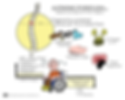
A massive overstimulation of the sympathetic NS, due to a noxious stimulus
Full Bladder-most common
Fecal impaction
Tight clothing
Pressure areas
ICU Treatment
Immediately sit the pt. up!!!!!
Assess for the stimulus causing this=Foley Cath, Fecal disimpaction, reposition, remove clothing
Hydralazine, Nipride, Nicardipine=Cardene, NTG patch/paste
Bipolar Leads=Limb Leads
Leads I, II, III
+ always looks to -
Augmented Leads
AvL
AvR
AvF
Precordial Leads
Leads V1-V6
Hemodynamics
Cardiac Output
The amount of blood the heart pumps out in 1 min
Normal CO-4-8 L
SV x HR=CO
Cardiac Index=cardiac output, but more accurate depending on height/weight
Stroke Volume
The amount of blood pumped out in 1 beat (Stroke)
Normal SV-60-110 mL
Ejection Fraction
The % of the ventricular fill, it is ejecting
>55%
Central Line
Midline
PICC line
PA Line
Swan Ganz
Swan Ganz
CVP
PAP
Wedge Pressure
CVP-Central Venous Pressure
Pressure in the Right Atrium
2-6 mmHg
PAP (Pulmonary Arterial Pressure)
Systolic & Diastolic
Measures pressure in both the Right ventricle & Pulmonary artery
Systolic-20-30
Diastolic-8-15
PAWP-Pulmonary Arterial Wedge Pressure
Left ventricular pressure
8-12 mmHg

